Rose Glass: The Fearless Visionary Transforming Psychological Cinema
Bold creativity, emotional intensity, and the quiet power of a film director and screenwriter reshaping modern storytelling

Introduction
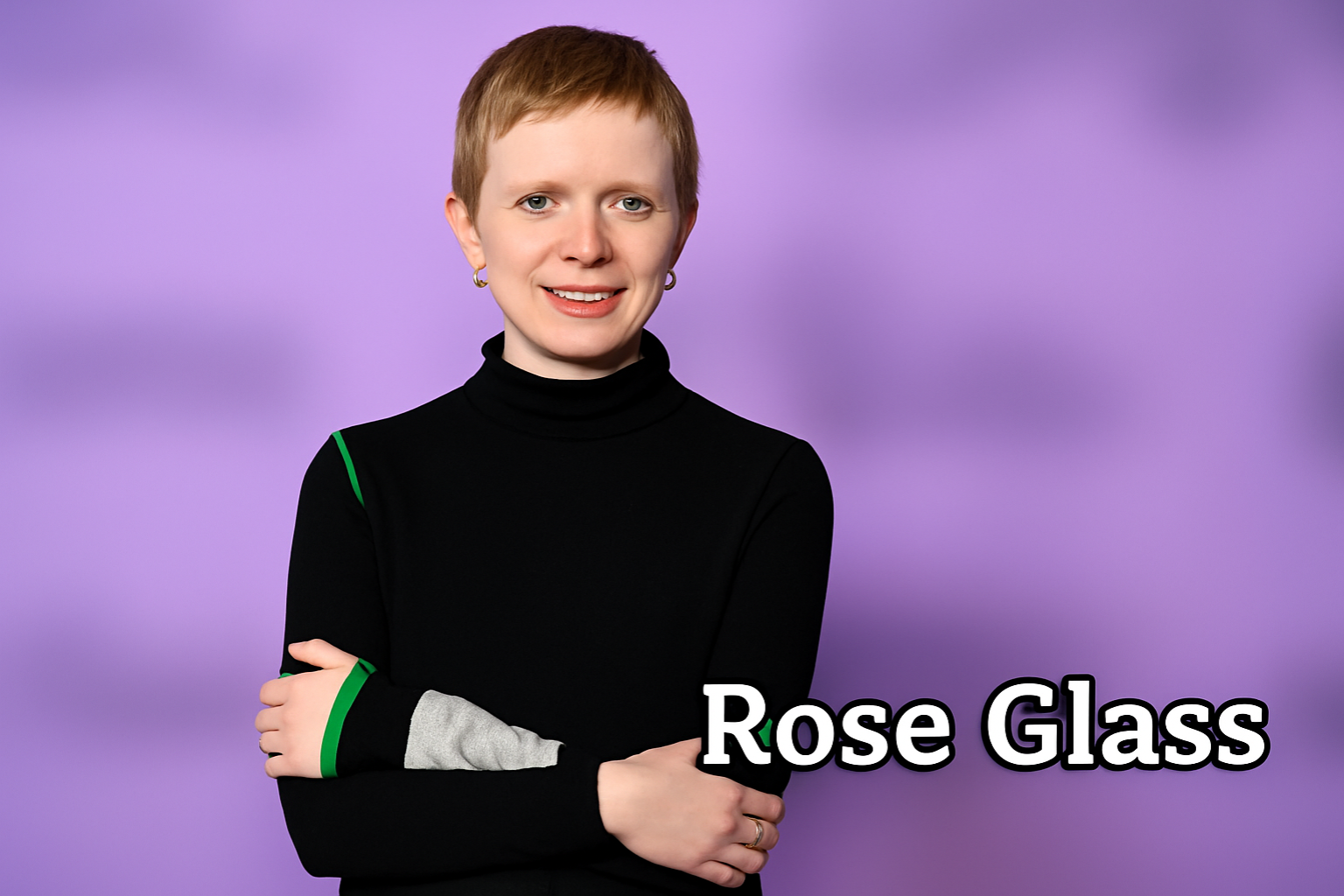
Rose Glass has emerged as one of the most compelling creative figures in contemporary British cinema. As a film director and screenwriter, she is celebrated for stories that dig deep into the human mind, exposing fear, obsession, faith, and emotional vulnerability with unsettling honesty. Her rise has been powered by discipline, formal training, and a refusal to follow safe creative paths. With each project, she challenges the audience while strengthening her position as a bold modern storyteller.
At the same time, her work attracts both admiration and discomfort. Praise follows her originality and emotional precision, while some viewers struggle with the intensity of her psychological themes. This balance of applause and unease has become a defining mark of her creative identity.
Quick Bio
| Detail | Information |
|---|---|
| Full Name | Rose Glass |
| Profession | Film Director and Screenwriter |
| Nationality | British |
| Birth Year | 1990 |
| Birthplace | London, England |
| Raised In | Essex, England |
| Education | London College of Communication, National Film and Television School |
| Known For | Saint Maud, Love Lies Bleeding |
| Writing Style | Psychological, emotional, character-driven |
| Awards | British Independent Film Award – Best Debut Director |
Early Life and Creative Foundation
Rose Glass developed her fascination with filmmaking at a young age. Growing up in England, she discovered storytelling through visual experimentation and home-style filmmaking. This early curiosity shaped her natural comfort with cameras, movement, and emotional atmosphere long before formal education entered the picture.
Her creative instincts leaned strongly toward inner conflict rather than spectacle. Even in her earliest experiments, she showed interest in mood, tension, and psychological realism. These early tendencies later became the core identity of her professional work as a film director and screenwriter.
Education and Professional Training
Rose Glass pursued structured education to sharpen her creative instincts. She studied film and video production at the London College of Communication, where she gained technical command of cinematography, editing, and narrative pacing. This period built her understanding of how visual choices influence emotional impact.
She later advanced to the National Film and Television School, one of the most competitive film institutions in the United Kingdom. Graduating in 2014, she completed her training with the short film Room 55, which established her ability to blend symbolism, mood, and psychological depth. This academic discipline became the backbone of her professional confidence.
Start of Her Professional Career
Following her formal training, Rose Glass began her career through short films that allowed her to refine her storytelling skills without commercial pressure. Each short project strengthened her command of emotional pacing and visual restraint.
These early works were essential in teaching her how to lead small production teams, work with actors, and build atmosphere through limited resources. The discipline learned during this period prepared her for the demanding transition into feature filmmaking.
Breakthrough With Saint Maud
Rose Glass made her feature-film debut with Saint Maud, a psychological horror drama that immediately set her apart. As both writer and director, she delivered a story that explored faith, isolation, obsession, and inner conflict with surgical precision.
The film gained wide recognition for its unsettling atmosphere and emotional control. It demonstrated her ability to combine cinematic restraint with raw psychological intensity. This breakthrough confirmed that she was not simply a promising newcomer but a serious creative force with a distinctive voice.
Awards and Industry Recognition
The success of Saint Maud earned Rose Glass the British Independent Film Award for Best Debut Director. This recognition placed her among the most promising filmmakers of her generation and solidified her credibility within the industry.
Beyond formal awards, the critical response elevated her profile among producers, studios, and international film festivals. She became widely viewed as a director capable of transforming intimate psychological ideas into powerful cinematic experiences.
Expansion With Love Lies Bleeding
Her second feature film, Love Lies Bleeding, marked a major expansion in creative range and scale. While remaining rooted in psychological tension, the film explored darker romantic and emotional territory, allowing her to experiment with broader character dynamics and visual ambition.
This project confirmed that her success was not limited to a single genre or debut momentum. It demonstrated professional growth, artistic flexibility, and a growing ability to manage larger productions while staying true to her emotional storytelling style.
Writing Style and Creative Identity
Rose Glass is widely known for her controlled storytelling approach. She avoids exaggerated spectacle in favor of slow-building tension and emotional realism. Her characters often face internal battles that feel as dangerous as any external threat.
As a film director and screenwriter, she prioritizes atmosphere, silence, and visual suggestion. Rather than explaining fear, she allows it to surface naturally through behavior, expression, and cinematic rhythm. This restraint gives her films lasting psychological impact.
Public Image and Professional Standing
Rose Glass maintains a professional image centered entirely on creative output. Her public presence reflects discipline, focus, and commitment to craft rather than celebrity culture. This distance from media spectacle strengthens her credibility as a serious filmmaker.
Her reputation continues to grow through consistent quality rather than viral visibility. The industry recognizes her as a creator who values substance over noise, an approach that earns long-term respect rather than short-term attention.
Challenges and Creative Pressure
With rising recognition comes increasing pressure. Each new project carries expectations shaped by the success of her earlier work. Audiences anticipate emotional depth, while critics closely examine every stylistic choice.
Some viewers embrace her quiet psychological intensity, while others find it demanding. This contrast reflects the emotional risk within her storytelling. She chooses narratives that require patience and emotional engagement rather than instant gratification.
Legacy and Long-Term Influence
Although still in the early stages of her career, Rose Glass has already left a strong imprint on contemporary British cinema. She represents a growing movement of filmmakers who bring psychological realism into mainstream visibility.
Her success demonstrates that carefully constructed, emotionally charged storytelling can still thrive in an industry often driven by spectacle. As her body of work expands, her influence on young filmmakers and genre storytelling continues to grow.
Conclusion
Rose Glass stands today as a commanding creative voice in modern cinema. From her disciplined training to her award-winning feature films, her career reflects a balance of artistic courage and technical precision. As a film director and screenwriter, she has proven that emotional intensity and psychological realism still hold powerful cinematic value.
Her future remains wide open, shaped by the same bold imagination and emotional control that brought her early success. With every new project, she strengthens a legacy built on courage, originality, and artistic truth.
Frequently Asked Questions
What is Rose Glass known for?
She is best known as the writer and director of Saint Maud and Love Lies Bleeding.
Is Rose Glass a film director and screenwriter?
Yes, she professionally works as both a film director and screenwriter in British cinema.
Where did Rose Glass study filmmaking?
She studied at the London College of Communication and the National Film and Television School.
What type of films does Rose Glass make?
Her work focuses on psychological drama, emotional realism, and atmospheric storytelling.
Has Rose Glass won any awards?
Yes, she won the British Independent Film Award for Best Debut Director.