Paul Drayton: A Distinguished Voice of British Classical Music and Creative Authority
Exploring the Vision, Discipline, and Artistic Depth of a Composer Who Shaped Modern Musical Education

Introduction
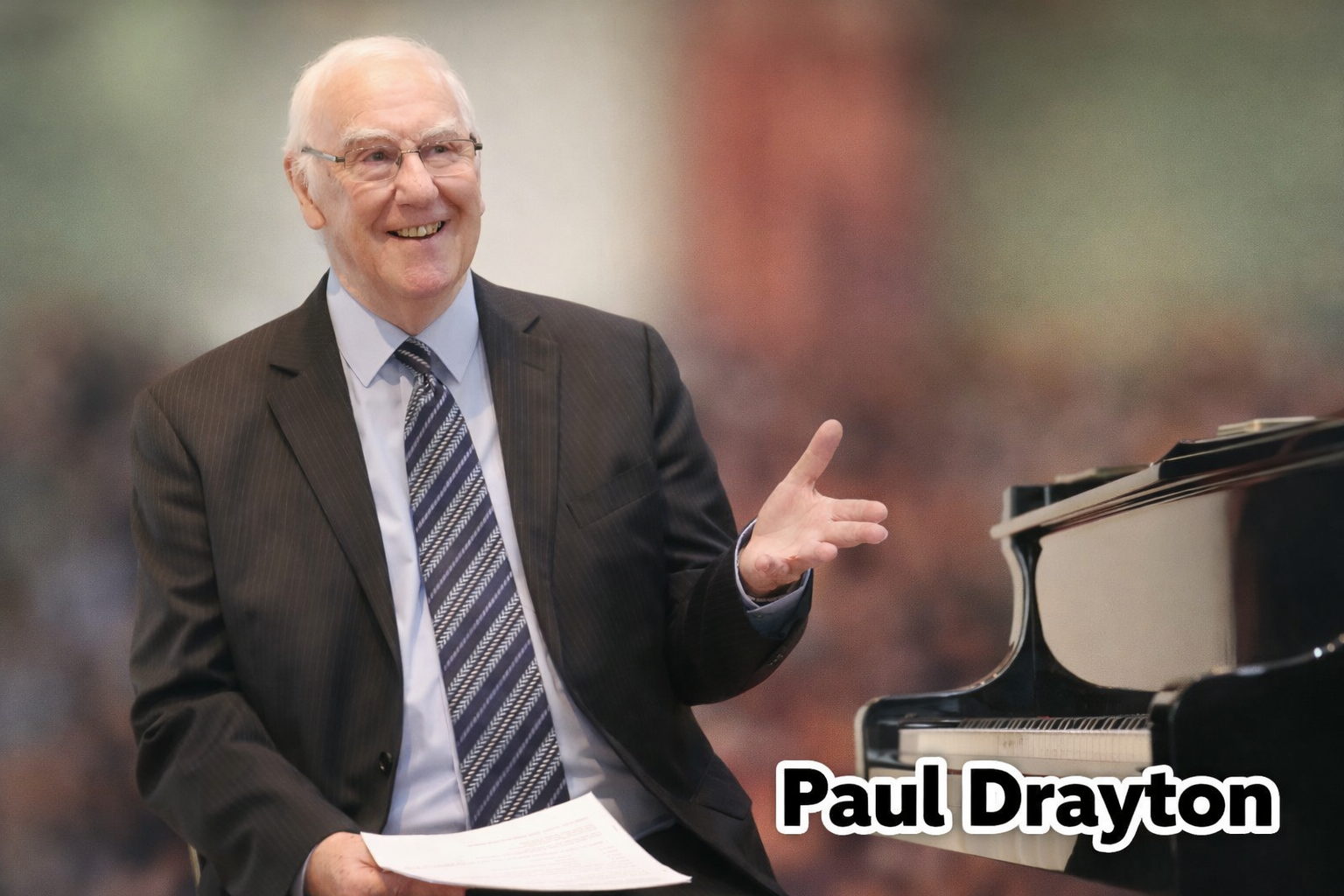
Paul Drayton is a respected British composer, conductor, pianist, and educator whose career reflects intellectual depth, creative discipline, and lasting cultural contribution. Born in 1944, he built his reputation not through controversy or publicity, but through consistent artistic excellence and a lifelong commitment to music. His work stands as a positive example of how quiet authority can leave a powerful imprint on classical music.
At the same time, Paul Drayton’s career has not been without challenges. Working largely outside the commercial spotlight meant his name is sometimes less familiar to mainstream audiences. Yet this very distance from popularity-driven trends allowed him to preserve artistic integrity and educational value, strengthening his long-term legacy.
Quick Bio of Paul Drayton
| Field | Details |
|---|---|
| Full Name | Paul Drayton |
| Year of Birth | 1944 |
| Nationality | British |
| Profession | Composer, Conductor, Pianist, Educator |
| Primary Genres | Classical, Choral, Opera, Vocal Music |
| Known For | Choral works, opera, music education |
| Academic Background | Music studies at Oxford |
| Teaching Roles | School and adult music education |
| Current Focus | Composition, teaching, musical leadership |
Early Life and Musical Foundations
Paul Drayton was born into a post-war Britain where education and discipline were central to personal development. From an early age, he showed strong musical sensitivity, particularly toward melody, harmony, and structure. These formative experiences shaped his later preference for music that balances intellectual clarity with emotional expression.
His formal musical education at Oxford provided him with a rigorous theoretical foundation. This period was critical in developing his analytical thinking and compositional voice. Positively, this academic grounding strengthened his authority as a composer. Negatively, it also placed him in a highly traditional environment that demanded precision and restraint, limiting early experimentation.
Paul Drayton as a Composer
As a composer, Paul Drayton is best known for his choral and vocal works. His music reflects clarity of structure, respect for text, and strong melodic identity. Rather than relying on excessive complexity, he focuses on musical meaning and accessibility, which has made his works suitable for both professional ensembles and educational institutions.
However, his compositional style does not chase trends. This has been a strength and a limitation. While it preserves musical integrity, it has also meant less exposure in commercial classical circles. Still, his compositions remain respected for their craftsmanship and emotional sincerity.
Contribution to Opera and Large-Scale Works
Paul Drayton’s creative range extends beyond choral music into opera and dramatic compositions. His operatic work demonstrates narrative awareness and sensitivity to character, showing his ability to translate drama into sound.
The challenge with opera lies in its scale and demand for resources. While this limited the frequency of performances, it also highlights Drayton’s ambition and creative courage. His operatic contributions strengthen his reputation as a versatile and serious composer.
Role as a Conductor
As a conductor, Paul Drayton brought discipline, musical insight, and educational clarity to ensembles under his direction. His approach emphasized understanding the score rather than mere performance, helping musicians connect intellectually with the music.
This method earned respect from students and performers alike. On the downside, his emphasis on precision sometimes contrasted with more expressive conducting styles, appealing more to academic musicians than to those seeking theatrical leadership.
Paul Drayton as a Pianist
Paul Drayton’s work as a pianist complemented his compositional and teaching roles. His performances reflected technical control and musical sensitivity rather than showmanship.
While this understated performance style limited public recognition, it reinforced his identity as a musician focused on substance over spectacle. His piano work also supported his educational mission, demonstrating music as a discipline rather than entertainment alone.
Commitment to Music Education
Education stands at the core of Paul Drayton’s career. He served in multiple teaching and leadership roles, guiding students across different age groups and skill levels. His teaching philosophy emphasized musical understanding, listening skills, and respect for tradition.
This educational focus is a major positive aspect of his legacy. However, it also meant less time dedicated to self-promotion as a composer. Even so, his influence continues through the musicians he trained and inspired.
Musical Writing and Intellectual Contribution
Beyond composition and performance, Paul Drayton contributed to musical understanding through writing. His work as a music writer reflects his desire to make classical music more approachable without simplifying its depth.
This intellectual contribution strengthened his role as an educator. Yet, academic writing often reaches a narrower audience, which limited broader public recognition. Still, it reinforced his credibility and authority within serious music circles.
Artistic Philosophy and Personal Values
Paul Drayton’s artistic philosophy centers on balance, discipline, and honesty. He values musical clarity over excess and education over fame. These values have given his work long-term relevance.
At the same time, this philosophy resists the fast-changing demands of modern media culture. While this protected his artistic standards, it also placed him outside mainstream visibility, a trade-off he appears to have accepted consciously.
Conclusion
Paul Drayton represents a powerful example of sustained artistic integrity. His career shows that influence does not always require mass attention. Through composition, education, and leadership, he has shaped British classical music quietly but effectively.
His legacy is both positive and complex. While he may not dominate headlines, his work continues to educate, inspire, and endure. This balance between authority and humility defines Paul Drayton’s lasting significance.
Frequently Asked Questions
Who is Paul Drayton?
Paul Drayton is a British composer, conductor, pianist, and educator born in 1944, known for his contributions to classical and choral music.
What type of music does Paul Drayton compose?
He primarily composes classical, choral, vocal, and operatic works with a focus on clarity and musical meaning.
Is Paul Drayton mainly a performer or a teacher?
He is both, but education plays a central role in his career alongside composition and conducting.
Why is Paul Drayton considered influential?
His influence comes from long-term educational impact, disciplined composition, and leadership in music institutions.
Is Paul Drayton active today?
He remains connected to music through composition, education, and artistic guidance rather than public performance.