Marianna Spring: The BBC Journalist Taking on Disinformation and Online Harm
Inside the Career of Britain’s Leading Voice on Conspiracy Culture, Online Abuse, and Digital Truth

Introduction
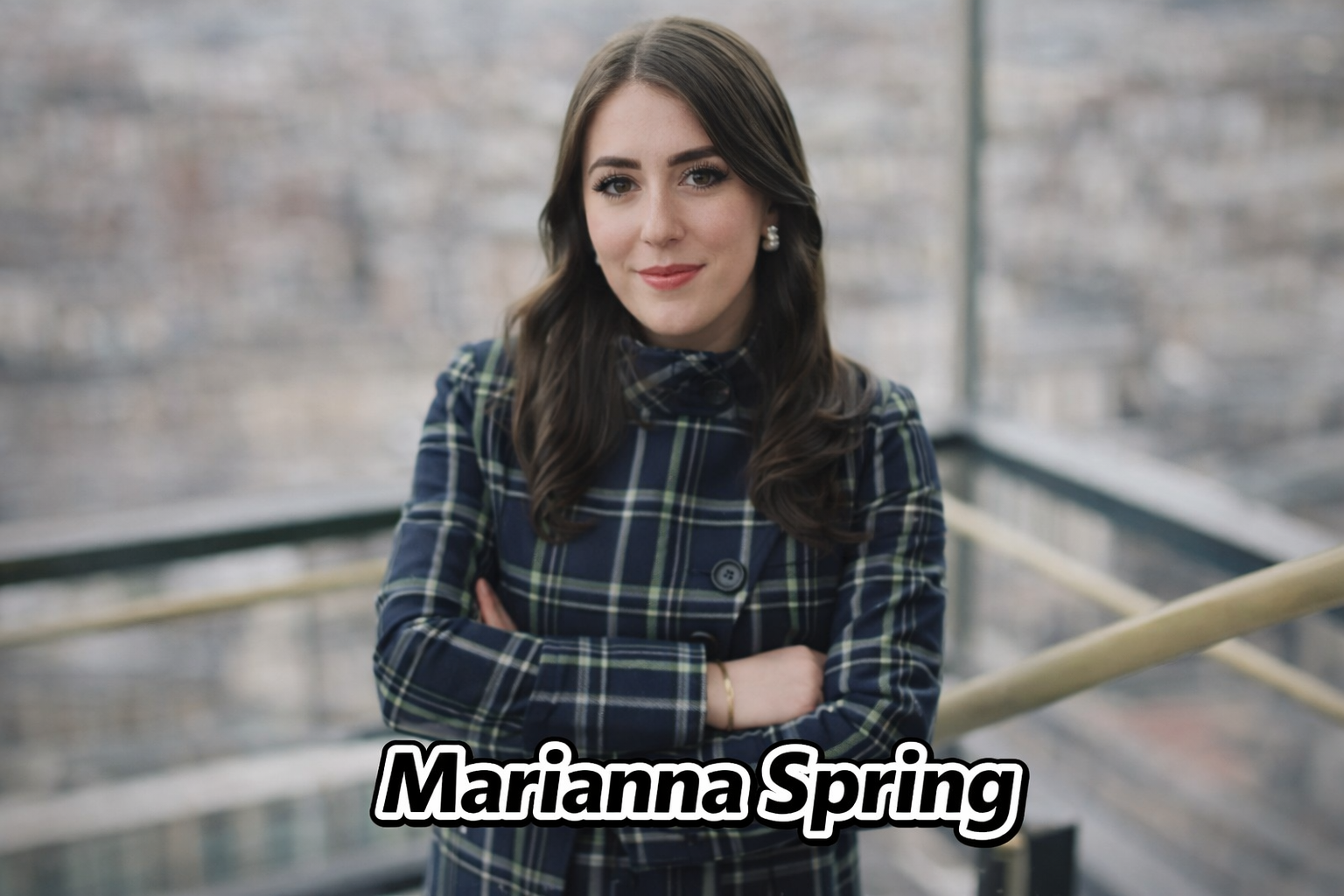
Marianna Spring has become one of the most important journalists of the digital era, not because she reports on politics or celebrity, but because she investigates how reality itself is distorted online. As the BBC’s first dedicated disinformation reporter and later its social media investigations correspondent, Marianna Spring works on the front line of a problem that affects elections, public health, personal safety, and trust in institutions.
Her journalism focuses on how false narratives spread, why conspiracy theories attract loyal communities, and how online abuse is organised and weaponised. For many audiences, Marianna Spring is the journalist who explains what is really happening on social platforms when outrage goes viral or when harmful ideas move from fringe forums into everyday conversation. Her work has reshaped how British media covers misinformation, shifting the focus from isolated false claims to the systems and incentives that allow them to thrive.
Quick Bio: Marianna Spring
| Detail | Information |
|---|---|
| Full Name | Marianna Spring |
| Nationality | British |
| Age | 29 years old |
| Date of birth | 21 February 1996 |
| Education | University of Oxford |
| Profession | Journalist and author |
| Employer | BBC |
| Known For | Disinformation and social media investigations |
| Notable Work | Marianna in Conspiracyland, BBC investigations |
| Areas of Focus | Misinformation, conspiracy theories, online abuse |
Early Life and Education
Marianna Spring, born on 21 February 1996, grew up in the United Kingdom and went on to study French and Russian at the University of Oxford. Her academic background is closely connected to her later work. Language study demands sensitivity to context, subtext, persuasion, and cultural framing—skills that are essential when analysing online narratives that rely as much on emotion and identity as on factual claims.
Before becoming widely known to the public, Marianna Spring worked in a range of editorial roles within the BBC, where she developed a strong grounding in traditional journalism values such as verification, balance, and public responsibility. These early professional experiences shaped her reporting approach and provided a rigorous foundation. When she later moved into covering disinformation and social media harm, she applied those established standards to a fast-moving digital environment that often resists clarity, transparency, and accountability.
Becoming the BBC’s Disinformation Specialist
In 2020, the BBC appointed Marianna Spring as its first specialist disinformation reporter. The timing was critical. The COVID-19 pandemic exposed how quickly false information could spread and how directly it could influence behaviour, from vaccine hesitancy to distrust in public institutions. The creation of her role signalled that misinformation was no longer a side issue. It had become a central public concern.
Marianna Spring’s reporting moved beyond simple fact-checking. Instead of focusing only on whether a claim was true or false, she examined how it spread, who promoted it, and why it resonated. This systemic approach helped audiences understand that disinformation is not random. It is often driven by algorithms, profit, ideology, and emotional manipulation.
Investigating Conspiracy Communities
A major part of Marianna Spring’s work involves reporting on conspiracy communities. Through extensive investigation, she has shown how these groups form, how they reinforce belief, and how they respond to challenge. Her journalism avoids mockery and instead seeks to explain the emotional and social needs that conspiracy movements fulfil.
This approach is essential to credibility. Treating conspiracy believers as simply irrational often strengthens their sense of persecution. Marianna Spring’s reporting instead highlights how fear, loneliness, and distrust create fertile ground for misinformation. By focusing on human motivations as well as digital mechanics, she offers a more complete picture of why false narratives persist.
Marianna in Conspiracyland and Long-Form Audio Reporting
Marianna Spring is strongly associated with the BBC Radio 4 audio series often referred to as Marianna in Conspiracyland. The podcast format allows her to explore complex subjects with depth and nuance. Listeners are taken inside online spaces that most people never see, hearing how influencers speak, how communities bond, and how narratives evolve over time.
What makes this work distinctive is transparency. Marianna Spring explains not just what she finds, but how she finds it. This openness builds trust and helps audiences understand the mechanics of disinformation rather than simply reacting to its outcomes. The result is journalism that educates as much as it informs.
Television Investigations and Public Accountability
In addition to audio reporting, Marianna Spring has contributed to major BBC television investigations, including current affairs programmes. Television allows her to visually demonstrate how online harm translates into real-world consequences. Harassment campaigns, misinformation about health, and coordinated abuse become tangible when audiences can see their impact.
These investigations often raise difficult questions about the responsibility of social media platforms. Marianna Spring’s work consistently highlights how engagement-driven systems can amplify the most extreme content. By linking platform design to human harm, she reframes online abuse as a structural issue rather than a collection of isolated incidents.
Online Abuse and the Personal Cost of Reporting
Marianna Spring’s reporting has made her a frequent target of online abuse. She has received sustained harassment, threats, and coordinated attacks, particularly from conspiracy communities she investigates. This abuse is not incidental. It is often intended to intimidate journalists and deter scrutiny.
Rather than retreating, Marianna Spring has incorporated this reality into her reporting, showing audiences how harassment operates as a tactic. Her experience illustrates a broader issue facing modern journalism: reporting on digital extremism often comes with personal risk. By continuing her work openly, she has helped normalise discussions about journalist safety and online accountability.
From Journalism to Reflection
Marianna Spring has also explored her work through longer-form writing, including a book examining her experiences inside conspiracy communities and online hate cultures. This shift allows for deeper reflection on the psychological toll of sustained exposure to hostility and misinformation.
In this format, she examines not only the subjects she reports on, but the environment that enables them. The book reinforces a central theme of her journalism: disinformation is not just about lies. It is about systems that reward outrage and silence moderation.
Why Marianna Spring’s Work Matters
Marianna Spring’s journalism matters because it addresses one of the defining challenges of the modern world. Information shapes decisions about health, politics, and trust. When that information environment is polluted, the consequences are profound.
By focusing on systems rather than symptoms, Marianna Spring helps audiences understand that misinformation is not simply a failure of individuals. It is often the result of platform incentives, social fragmentation, and emotional vulnerability. Her work encourages a more informed and less polarised response to online harm.
Marianna Spring and the Future of Journalism
Marianna Spring represents a new kind of journalistic beat, one that blends technology, sociology, psychology, and traditional reporting. As artificial intelligence and increasingly sophisticated manipulation tools emerge, the need for journalists who understand digital ecosystems will grow.
Her career offers a model for how journalism can adapt without abandoning its core values. Accuracy, empathy, and accountability remain central, even as the medium evolves.
Conclusion
Marianna Spring has become a defining figure in journalism because she reports on one of the most urgent issues of the digital age. Through careful investigation, human storytelling, and persistence in the face of abuse, she has helped audiences understand how disinformation and online harm operate beneath the surface.
Her work demonstrates that journalism still matters in a world of viral falsehoods, not as a loud rebuttal, but as a patient guide through complexity. As society continues to grapple with trust in the information it consumes, Marianna Spring’s reporting remains essential, credible, and deeply relevant.
Frequently Asked Questions
Who is Marianna Spring?
Marianna Spring is a British journalist known for her work investigating disinformation, conspiracy theories, and online abuse for the BBC.
What does Marianna Spring do at the BBC?
She serves as the BBC’s social media investigations correspondent, focusing on how misinformation spreads and causes real-world harm.
Why is Marianna Spring associated with conspiracy reporting?
She has extensively investigated conspiracy communities, explaining how they form, why people join them, and how they influence behaviour.
Has Marianna Spring faced online abuse?
Yes, she has been widely targeted by online harassment due to her reporting, which she has publicly discussed as part of highlighting digital harm.
Why is Marianna Spring an important journalist today?
Her work helps audiences understand the modern information environment and the systems that enable misinformation, making her reporting highly relevant and impactful.