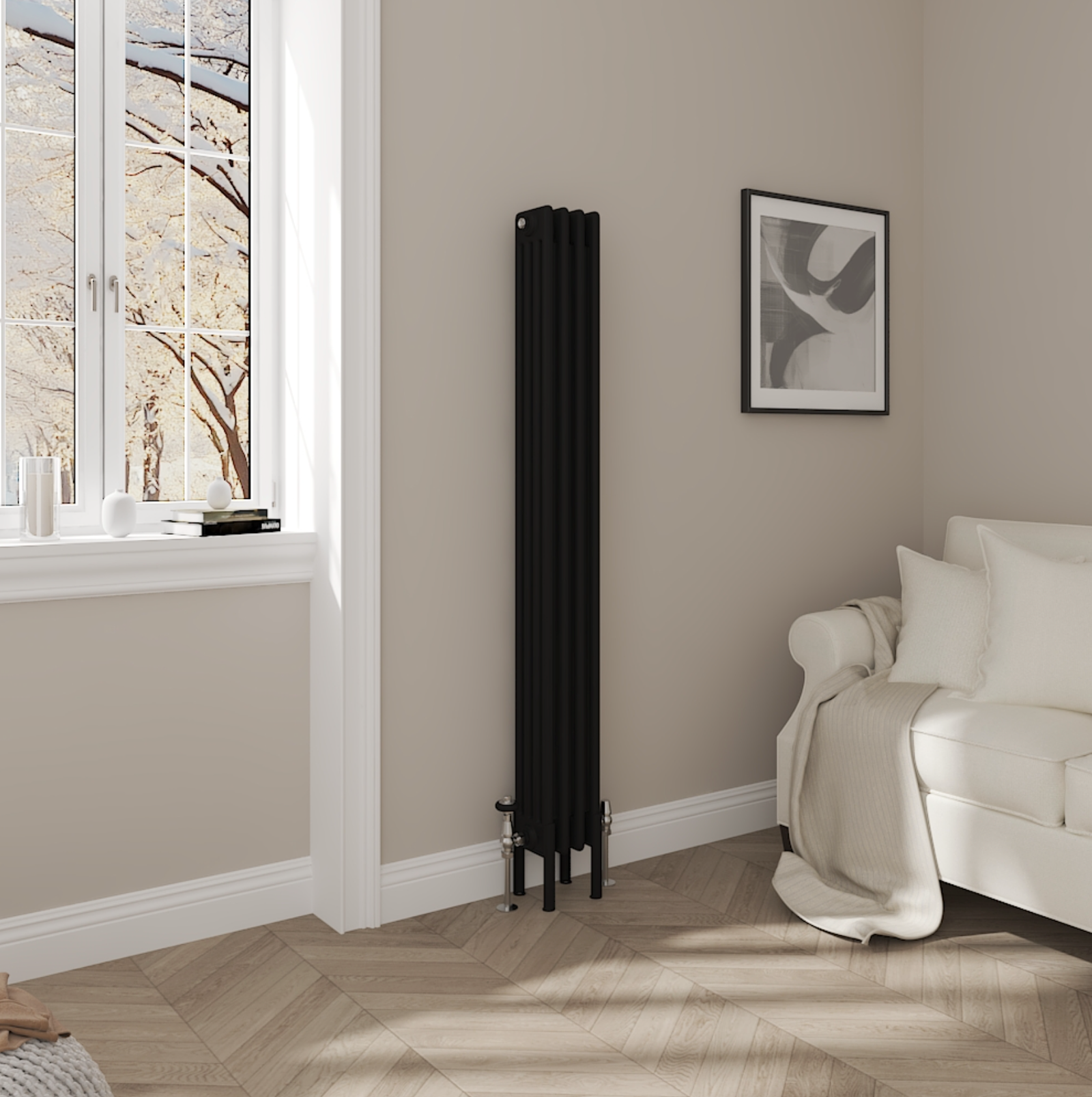
It’s a common feature of the cold winter months in the UK: soaring energy bills that you can’t seem to explain, especially after a long month of lounging around the living room. Of course, most homes use central heating of some kind, and it’s likely that within that system, your radiators are probably consuming the most energy. Even traditional horizontal panel radiators and modern vertical radiators will consume different amounts of energy, but are your radiators really causing the high energy bill, and how much do they actually use?
Everyone forgets that radiators use energy, don’t they? Well, actually, they don’t; they are passive, so they use no energy at all. It is the boiler that uses energy to heat the water, which then circulates through the radiator. However, the way a radiator looks can have an impact on the boiler and thus on your energy bills. The size, condition and efficiency of the radiator (vertical or horizontal) will have an effect on how well it performs.
How Radiators and Energy Consumption Are Connected
The common perception is that the boiler is the heart of your heating system. And yes, it is vital – performing under pressure for long periods of time. But let’s not overlook the importance of the radiators; if they are old, incorrectly sized, or not perfectly horizontal, the poor boiler has to work harder to get the system up to temperature, and that can’t be good for it.
A well-maintained radiator allows the boiler to boil the water to the correct temperature, pump the hot water around the system and then distribute the heat evenly throughout the room. However, there are a few potential problems that can occur, leading to your boiler working harder than required and pushing up your bills.
These potential problems are easily rectified and often require little more than some bleeding of the radiator to clear any trapped air. Other issues, such as excessive bleeding or leaks, do require more work and should be left to a qualified heating engineer.
- Trapped air inside the radiators is preventing proper water circulation
- Sludge or limescale build-up is blocking the flow of hot water
- Undersized radiators that cannot adequately heat the room
- Faulty or worn thermostatic valves restricting water flow
When any of these issues are present, the boiler runs longer, works harder, and burns more fuel than it should.
The Role of Radiator Size and Output
Most people are familiar with the common energy efficiency measures such as draught-proofing, double glazing, solar panels and low-energy light bulbs, but there are many situations where the correct sizing of radiators can have a large impact on your home’s energy efficiency. If radiators are too small for a room, then they are unlikely to be able to raise the temperature to a satisfactory level. This will result in the thermostat being called for heat for longer periods, causing the boiler to fire for longer and, as a result, increasing energy consumption.
Most radiators have a British Thermal Unit (BTU) rating; this is shown on most models and will indicate how much heat the unit will produce. This can often be improved,, allowing the unit to perform to the highest standard possible.
- Enter room dimensions (length, width, height) in feet.
- It is recommended to use an online BTU calculator to accurately size your room or area for proper heat.
- Compare the results with the BTU rating of your existing radiator to help select the appropriate size for your requirements.
- If the shortfall is large, then the alternative may be to consider increasing the size of the radiator.
You may also wish to seek advice on this from a heating engineer.
Do Electric Radiators Use More Energy?
This is a question that comes up often, particularly as more homeowners consider electric radiators as an alternative to traditional wet central heating systems. Electric radiators convert almost all of the electricity they use directly into heat, which means they are close to 100% efficient at the point of use.
However, there are a few important trade-offs to be aware of:
- Electricity is a more expensive fuel than gas in most parts of the UK
- Running electric radiators as your sole heat source can be costly in larger homes
- Each electric radiator operates independently, giving you greater room-by-room control
- Used selectively, electric radiators can actually help reduce energy waste in rooms that are rarely occupied
Simple Ways to Reduce Radiator Energy Use
The good news is that there are several straightforward steps you can take to make your radiators more energy efficient without replacing the entire system:
- Bleed your radiators regularly to remove trapped air and restore proper water circulation.
- Fit thermostatic radiator valves (TRVs) on each radiator for room-by-room temperature control, so you are only heating the spaces you are actually using.
- Keep furniture away from radiators. A sofa pushed against a radiator absorbs heat before it can circulate into the room, forcing the system to run longer than necessary.
- Add a magnetic filter to your system to catch sludge and debris before it builds up inside your radiators and pipes.
- Consider upgrading old radiators if your radiators are heavily corroded or simply past their best; a modern replacement can make a noticeable difference to efficiency and running costs.
The Bottom Line
Radiators are passive items; it is the heating system as a whole, plus its installation and usage, that guzzles most of the energy. But the boiler’s running mate can still cost you money – if you misuse it or if it’s poorly maintained. On the other hand, if you use your radiators correctly and look after them, you’ll keep cosy this winter without sending your energy bills through the roof.