Tom Swarbrick: Broadcasting, Politics, and the Craft of Modern Public Conversation
A British radio presenter bridging journalism, live debate, and political insight

Introduction
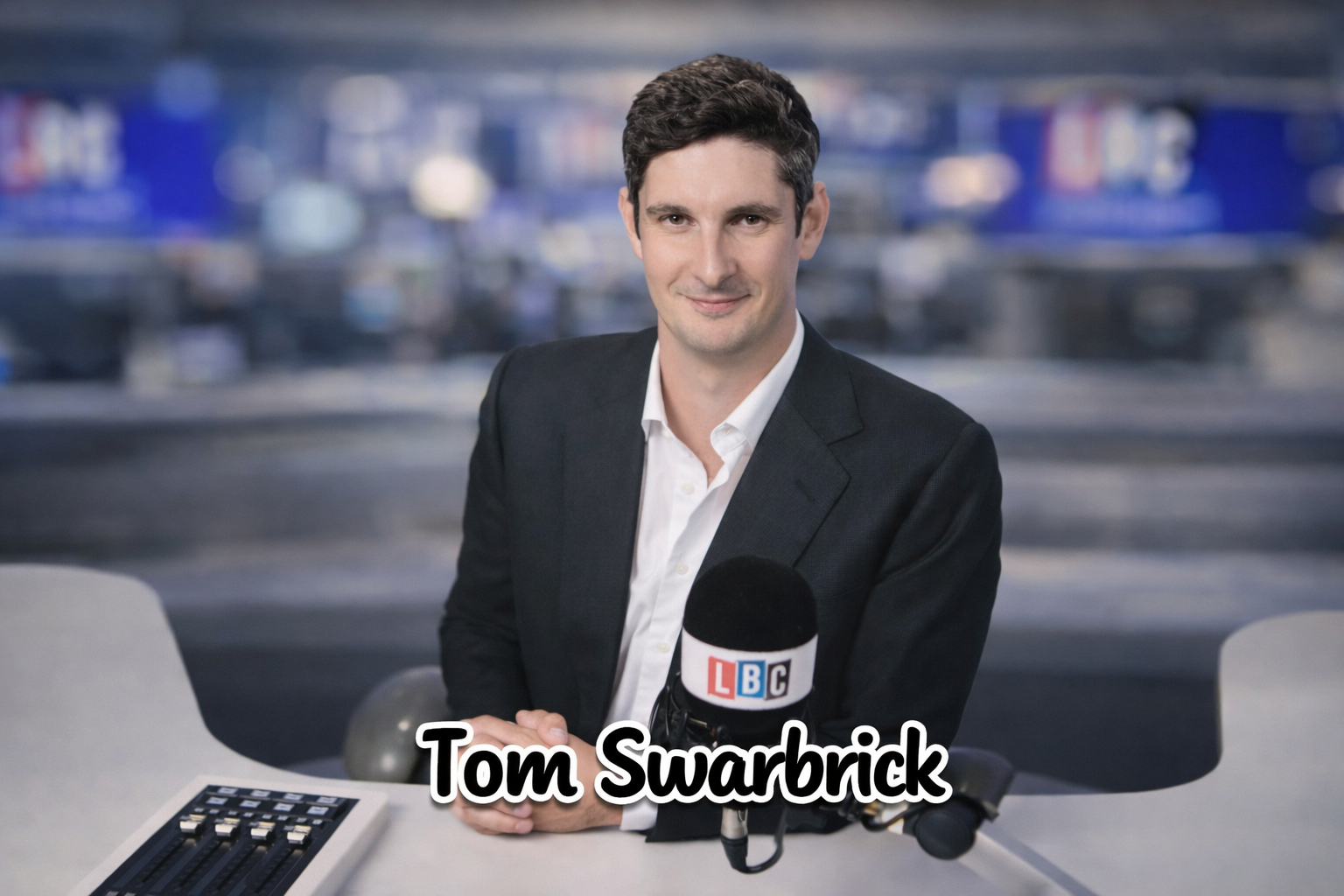
Tom Swarbrick has become a familiar and trusted voice in British media, known for his ability to guide complex political stories into clear, engaging public discussion. As a radio presenter, journalist, and former government communications figure, his career reflects the changing nature of how news is explained and debated in the United Kingdom. He operates in a space where immediacy matters, where listeners expect both clarity and challenge, and where live conversation often shapes public understanding more powerfully than written headlines.
Born on March 30, 1987, Tom Swarbrick is 38 years old. His relatively young age, combined with the breadth of his experience, places him in a distinctive position within British broadcasting. He belongs to a generation of media professionals who have worked across traditional journalism, live talk radio, and the political machinery of government, giving him insight into how stories are created, managed, and contested.
Quick Bio of Tom Swarbrick
| Field | Details |
|---|---|
| Full Name | Tom Swarbrick |
| Date of Birth | March 30, 1987 |
| Age | 38 years |
| Nationality | British |
| Profession | Radio presenter and journalist |
| Current Role | Weekday drivetime host on LBC |
| Known For | Live political debate, in-depth interviews, audience-led discussion |
| Previous Role | Head of Broadcast at 10 Downing Street |
| Award | National Radio Journalist of the Year (2014) |
| Broadcasting Focus | Politics, public affairs, current events |
| Media Style | Measured, analytical, listener-focused |
Early Career and Journalistic Foundations
Tom Swarbrick’s professional identity was shaped early by journalism rather than opinion-led commentary. He began his career in radio reporting, including work in local and regional broadcasting, where the emphasis is on explaining national and international events through their impact on everyday life. This grounding matters, because local radio demands precision and empathy. Reporters must be able to speak to audiences who are not immersed in political language and who expect relevance rather than abstraction.
Over time, this foundation allowed Tom Swarbrick to move into national broadcasting. His reporting background gave him credibility, not just as a presenter, but as a journalist capable of asking informed and persistent questions. This credibility was formally recognised when he won National Radio Journalist of the Year in 2014, an award that reflected peer recognition for serious reporting rather than studio performance alone.
From Journalism to Government Communications
One of the defining moments in Tom Swarbrick’s career came when he stepped out of broadcasting and into government. He was appointed Head of Broadcast at 10 Downing Street during Theresa May’s premiership, a role that placed him at the heart of political communications at a time of exceptional national tension.
The job of Head of Broadcast is not about spin in the caricatured sense. It is about preparing leaders for scrutiny, coordinating interviews, and ensuring that messages are communicated clearly under pressure. For someone who had spent years questioning politicians, the move offered a rare reversal of perspective. Tom Swarbrick experienced first-hand how governments anticipate media challenges, how interviews are rehearsed, and how easily narratives can unravel.
This period inside government has continued to shape how he approaches broadcasting. It gave him an understanding of the mechanics behind political messaging, which later became a strength when he returned to the role of interviewer and presenter. He knows when a politician is avoiding a question not just instinctively, but structurally.
Return to Broadcasting and Rise at LBC
After leaving government, Tom Swarbrick returned to radio, joining LBC in a more prominent on-air role. LBC’s format, built around live discussion and caller participation, suits presenters who can combine authority with approachability. His initial shows allowed him to refine his on-air identity, balancing robust questioning with a tone that encouraged listener engagement rather than intimidation.
His progression through the station eventually led to one of the most influential roles in commercial radio: the weekday drivetime programme. Broadcasting between late afternoon and early evening, drivetime shows reach audiences at a moment when the day’s news is settling into public consciousness. The presenter’s role is not simply to report events, but to help listeners interpret them.
Tom Swarbrick’s appointment to this slot marked institutional confidence in his judgement and style. Drivetime is where broadcasters are most visible, most clipped for social media, and most exposed to criticism. His approach has been defined by structure and control, ensuring that debates remain focused even when emotions run high.
Style, Tone, and Live Radio Pressure
What distinguishes Tom Swarbrick as a presenter is not volume or provocation, but measured intensity. He asks direct questions and follows up when answers drift, yet he avoids turning disagreement into spectacle for its own sake. This style reflects his background in journalism and his awareness of how easily public debate can become distorted by performative outrage.
Live radio is unforgiving. Presenters must react instantly to breaking news, unexpected callers, and guests who may attempt to derail a conversation. Tom Swarbrick’s career shows an ability to maintain composure in these moments, steering discussion back to substance without sounding dismissive. This skill is particularly valuable in an era when short clips can circulate widely, often stripped of context.
Public Engagement Beyond Politics
Although much of Tom Swarbrick’s work focuses on politics and public affairs, he has also spoken openly about issues that resonate on a personal level, including online safety and parenting in the digital age. These discussions humanise his on-air presence and help bridge the gap between policy debate and lived experience.
For many listeners, this balance is key. A presenter who acknowledges personal concerns alongside political analysis can connect more effectively with a broad audience. It reinforces the idea that public policy is not an abstract game, but something that shapes daily life.
Age, Experience, and Generational Perspective
At 38, Tom Swarbrick occupies an interesting generational position in British media. He is old enough to have worked through major political events such as the Brexit referendum and the COVID-19 pandemic, yet young enough to be fluent in the digital environment that now surrounds broadcasting. He understands how radio interacts with social media, how narratives spread beyond the airwaves, and how audience engagement has evolved.
This perspective allows him to navigate modern broadcasting with awareness rather than nostalgia. He operates comfortably in a hybrid media world where radio, online clips, and public reaction exist simultaneously.
Influence Without Partisanship
Despite his experience inside government, Tom Swarbrick does not present himself as a partisan figure. His influence lies in facilitation rather than advocacy. He creates space for argument, challenges claims from across the political spectrum, and prioritises clarity over allegiance.
This position is not without tension. Some listeners expect stronger alignment, while others value neutrality. His continued prominence suggests that there is still a significant audience for presenters who focus on questioning rather than campaigning.
Conclusion
Tom Swarbrick’s career illustrates how modern British broadcasting has evolved. He is a journalist shaped by reporting, a communicator sharpened by government experience, and a radio presenter trusted with one of the most influential slots in commercial media. Born on March 30, 1987, and now 38 years old, he represents a generation of broadcasters who move fluently between journalism and political reality.
His significance lies not in loud opinion, but in the steady craft of public conversation. By combining experience, discipline, and live broadcasting skill, Tom Swarbrick has become an important figure in how many people in the UK encounter and make sense of the news.
Frequently Asked Questions
Who is Tom Swarbrick?
Tom Swarbrick is a British radio presenter and journalist best known for hosting LBC’s weekday drivetime programme, where he leads live discussions on politics, current affairs, and major news stories.
How old is Tom Swarbrick?
Tom Swarbrick was born on March 30, 1987, making him 38 years old.
What is Tom Swarbrick known for on radio?
He is known for his calm but incisive interviewing style, his ability to manage live debate, and his focus on clarity and accountability rather than confrontation for its own sake.
Did Tom Swarbrick work in government?
Yes. He previously served as Head of Broadcast at 10 Downing Street during Theresa May’s premiership, giving him first-hand experience of political communications from inside government.
Why is Tom Swarbrick influential in British media?
He is influential because he operates at the intersection of journalism and public conversation. His combination of reporting credentials, government experience, and a prime drivetime slot allows him to shape how many listeners understand and debate the news each day.