Tim Harford: The Powerful Thinker Who Turned Economics into Everyday Insight

Introduction
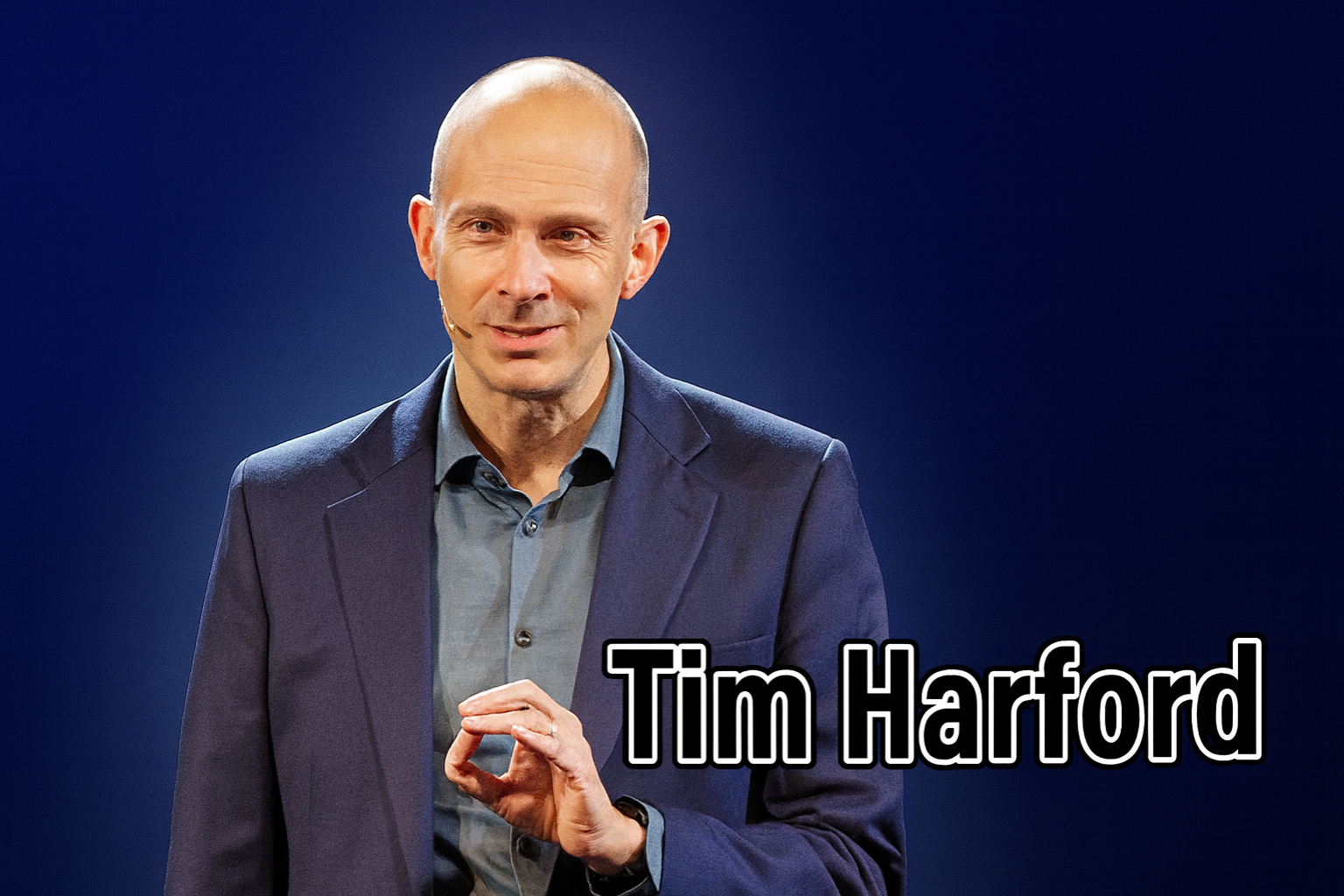
Tim Harford is widely recognised as a trusted journalist who has transformed the way people engage with economics and data. As an English journalist, author and broadcaster, he has built a reputation for explaining complex ideas with clarity, balance, and intellectual honesty. His work stands at the intersection of economic journalism, data journalism, and public education.
At the same time, Tim Harford’s insistence on evidence-based analysis can feel uncomfortable to those seeking easy answers. He frequently challenges popular claims, reminding audiences that understanding uncertainty is just as important as confidence. This combination of accessibility and scepticism defines his influence as a public intellectual in modern media.
Quick Bio: Tim Harford
| Detail | Information |
|---|---|
| Full Name | Timothy Douglas Harford |
| Date of Birth | 27 September 1973 |
| Age | 52 years (as of 2025) |
| Birthplace | Kent, England |
| Nationality | British |
| Profession | English journalist, author and broadcaster |
| Known For | Financial journalism and economic education |
| Career Status | Active |
Early Life and Background
Tim Harford was born in Kent, England, and grew up in the United Kingdom. From an early age, he showed curiosity about how systems work and why people make the choices they do. This natural interest in incentives and behaviour later shaped his identity as a British journalist focused on real-world explanations.
Rather than being drawn to ideology, he developed a habit of questioning assumptions. This early mindset would later become central to his approach to analytical reporting, where curiosity matters more than certainty.
Education and Intellectual Foundation
Tim Harford received his secondary education at Aylesbury Grammar School before studying Philosophy, Politics and Economics at the University of Oxford. As an Oxford-educated thinker and PPE graduate, he developed a strong foundation in critical reasoning and interdisciplinary analysis.
He later completed an advanced degree in economics, strengthening his economics background. This combination of philosophy, politics, and economics gave him the tools to become a respected commentator capable of connecting theory with everyday life.
Start of Career
Before entering journalism, Tim Harford worked in professional economic roles, gaining practical experience with how policies and incentives function inside organisations. These early roles helped him understand economics beyond theory, grounding his later work in reality.
His move into journalism marked a shift toward public education in economics. Instead of advising institutions privately, he chose to communicate ideas openly, helping readers and listeners develop stronger critical thinking skills.
Rise as an English Journalist
Financial Journalism and Public Trust
Tim Harford rose to prominence through financial journalism, becoming known as a clear and thoughtful newspaper columnist. His writing explains how markets, incentives, and policies shape everyday experiences, making economics relevant rather than abstract.
As a British journalist, he has earned trust by avoiding exaggeration and focusing on facts. While some critics prefer bold predictions, his commitment to caution reinforces his reputation for evidence-based analysis and clear communication.
Writing Style and Voice
His style combines storytelling with scepticism. He believes that understanding comes from questioning numbers, not worshipping them. This philosophy has made him a leading voice in economic commentary and educational journalism.
Books and Authorship
Tim Harford is also a widely read non-fiction author. His books explore economics, statistics, and human behaviour through engaging stories and practical examples.
Across his writing, he emphasises decision-making, understanding uncertainty, and learning from failure. While his work is praised for accessibility, it also challenges readers to abandon comforting myths. This balance has strengthened his role as a media communicator who values truth over simplicity.
Broadcasting, Radio, and Podcasting
Radio and Data Storytelling
Tim Harford is a respected radio presenter, known for explaining statistics used in news and public debate. His broadcasting work highlights the importance of statistics in public debate, encouraging audiences to question how numbers are produced and presented.
As an English journalist in broadcasting, he blends authority with approachability, helping listeners build data literacy without intimidation.
Podcast Host and Modern Media
He is also a successful podcast host, using audio storytelling to explore mistakes, learning, and unintended consequences. Through these narratives, he demonstrates how errors can reveal deeper truths about systems and behaviour.
His approach reflects a broader commitment to storytelling with data, making complex insights memorable and human.
Career Overview
Tim Harford’s career spans journalism, broadcasting, and authorship. He is equally at home writing columns, presenting radio programmes, or speaking to live audiences.
As a trusted journalist, he avoids sensationalism while remaining engaging. This approach has positioned him as a leading figure in public understanding of economics and economic education.
Influence and Public Impact
Tim Harford has had a significant media influence on how people interpret numbers and claims. His work promotes scepticism, humility, and careful reasoning, particularly in an era of information overload.
Through educational journalism, he has helped improve economic literacy and critical evaluation of data. His influence extends beyond economics into broader cultural conversations about truth and evidence, reinforcing his cultural impact.
Personal Life
Tim Harford lives in Oxford, England, with his family. He maintains a clear boundary between his professional work and private life, allowing his ideas rather than his personality to remain central.
This restraint strengthens his credibility as a respected commentator focused on substance rather than self-promotion.
Conclusion
Tim Harford’s career shows that clarity can be more powerful than certainty. As an English journalist, he has reshaped how economics and data are communicated, prioritising understanding over persuasion.
While his refusal to simplify complex issues can frustrate some audiences, it also builds trust. Through analytical reporting, economic commentary, and public education, Tim Harford continues to demonstrate the value of careful thinking in modern life.
Frequently Asked Questions (FAQ)
Who is Tim Harford?
Tim Harford is an English journalist, author and broadcaster known for explaining economics and statistics clearly.
What is Tim Harford known for?
He is known for financial journalism, broadcasting, and books that improve public understanding of economics.
What subjects does Tim Harford focus on?
He focuses on economics explained, data literacy, decision-making, and understanding uncertainty.
Is Tim Harford still active?
Yes, he continues to work as a journalist, broadcaster, and podcast host.
Why is Tim Harford influential?
He is influential for promoting critical thinking, evidence-based analysis, and clear communication in public debate.