Edward Berger: The Uncompromising Force of Modern Cinema
The Swiss-Austrian Director and Screenwriter Who Redefined Emotional Realism for Global Audiences

Introduction
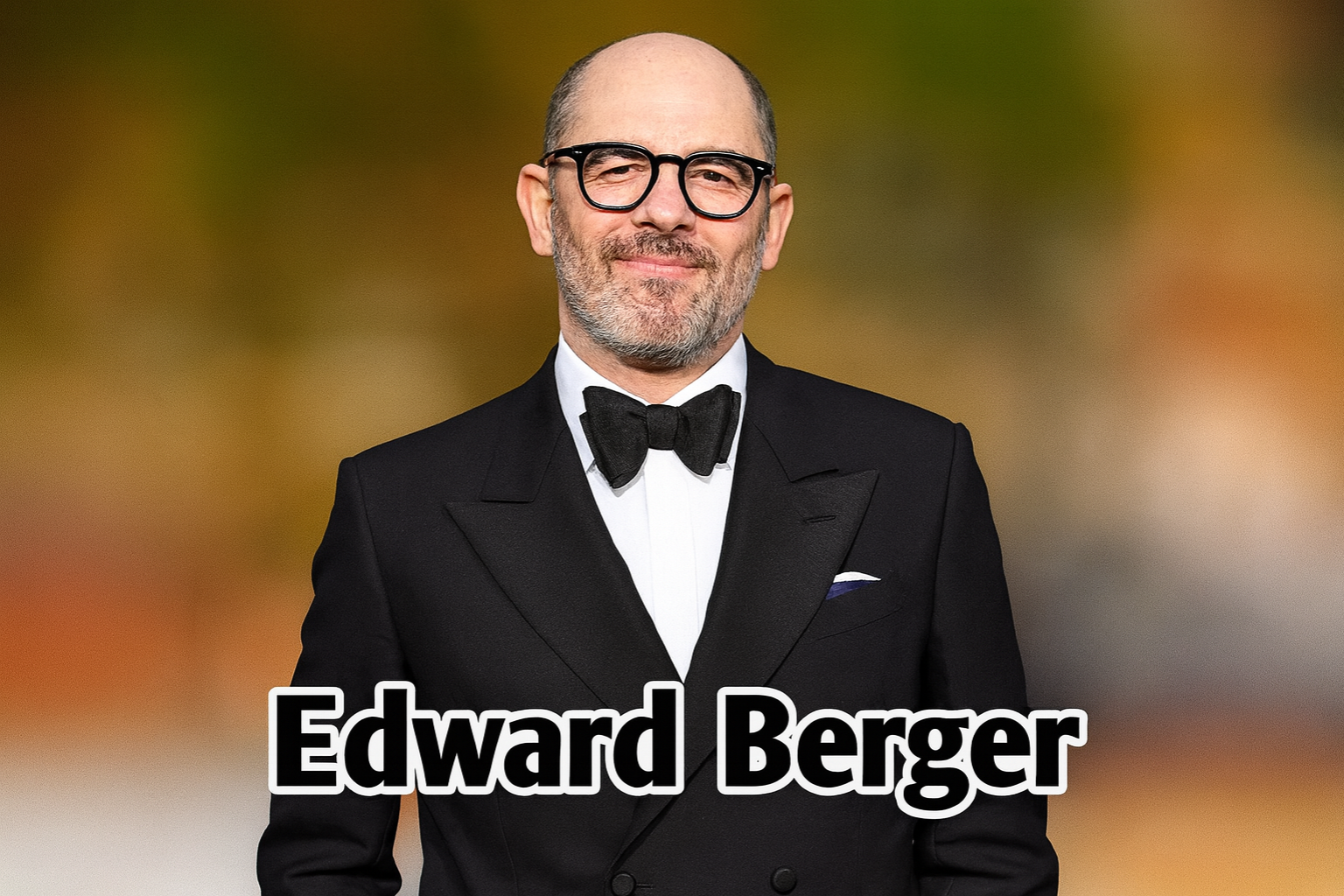
Edward Berger has become one of the most influential names in modern filmmaking. Known worldwide as a Swiss-Austrian director and screenwriter, he is admired for his emotionally intense, morally complex, and psychologically driven cinema. His rise from European film circles to the peak of global cinema represents both remarkable success and immense creative pressure. While critics praise him as an award-winning director and visionary filmmaker, audiences also recognize that his films demand emotional endurance. This duality of respect and challenge defines his artistic identity.
What truly separates Edward Berger from many contemporary filmmakers is his fearless commitment to emotional realism and disciplined filmmaking. As a European film director with international reach, he tells human-centered stories that refuse comfort and reject spectacle for spectacle’s sake. His films do not entertain easily, yet they linger deeply in memory.
Quick Bio of Edward Berger
| Field | Details |
|---|---|
| Full Name | Edward Berger |
| Profession | Swiss-Austrian director and screenwriter |
| Date of Birth | 25 June 1970 |
| Birthplace | Wolfsburg, West Germany |
| Nationality | Swiss and Austrian citizenship |
| Education | Film directing at New York University |
| Years Active | 1994–present |
| Known For | Emotional realism, character-driven films |
| Spouse | Nele Mueller-Stöfen |
| Industry | European film industry, global cinema |
Early Life and Personal Background
Edward Berger was born on 25 June 1970 in Wolfsburg, a city shaped by industry and dramatic post-war history. Growing up in Germany, he developed an early exposure to realism, struggle, and the psychological weight of human life. These influences would later surface clearly in his approach to harsh realism and ethical storytelling.
As a young man, Berger showed strong interest in visual narratives and human psychology. Rather than chasing popularity or early fame, he focused on understanding people, conflict, and moral tension. This slow, thoughtful development became one of his greatest strengths, though it also delayed commercial recognition in his early years.
Education and Formation as a Filmmaker
Edward Berger pursued formal film education in the United States, where he studied film directing at New York University. This training exposed him to international filmmaking traditions and helped him balance European artistic cinema with accessible global storytelling.
His years of academic training sharpened his skills in psychological storytelling and disciplined filmmaking. He learned to control pacing, silence, framing, and emotional build-up. This foundation allowed him to later emerge as a Swiss-Austrian filmmaker comfortable navigating both intimate drama and large-scale international productions.
Start of Career and Industry Struggles
After completing his education in 1994, Edward Berger entered the independent film scene. Like many rising filmmakers, his early career was marked by uncertainty, low budgets, and creative resistance. He worked behind the scenes, gaining experience in production and directing without immediate recognition.
In 1997, he returned to Germany to establish himself fully as a feature film director and screenwriter. The transition was professionally demanding. Rejection and competition tested his commitment. These struggles, however, forged his identity as a risk-taking filmmaker driven by emotional truth rather than easy success.
Rise Through European Film and Television
Edward Berger steadily gained recognition through work in German television, a training ground that sharpened his skills as a feature film director. His projects displayed intense character studies, moral conflict in movies, and carefully controlled storytelling.
His growing reputation as a contemporary filmmaker was built on consistency and artistic integrity. While audiences appreciated his realism, some viewers found his films emotionally exhausting. This polarized reaction became typical of his career: admiration mixed with discomfort.
International Breakthrough and Global Recognition
Edward Berger’s international reputation expanded when his work reached the broader international film scene. His projects as an international film director showed that European artistic cinema could command global attention.
His defining breakthrough came when he directed a globally celebrated anti-war storytelling film that transformed him into an Oscar-winning director. The film’s success brought global critical acclaim and confirmed his position as one of the most internationally respected directors of modern times. With this success came enormous expectations that followed every project thereafter.
Artistic Style and Creative Identity
As a Swiss-Austrian director and screenwriter, Edward Berger is known for emotional realism, moral complexity in films, and visually controlled directing. His camera avoids unnecessary movement, his narratives avoid comfort, and his characters exist in ethically fragile environments.
He is widely respected as a visionary filmmaker and cinema innovator because he reshaped how war realism in cinema and human suffering in cinema are portrayed. His work prioritizes psychological war films over spectacle, and ethical storytelling over entertainment shortcuts.
Emotional Realism and Psychological Depth
Edward Berger’s defining strength lies in emotional realism. His characters experience fear, regret, guilt, and confusion in ways that feel painfully authentic. These intense character studies force viewers to confront their own moral boundaries.
Rather than glorifying heroism, he emphasizes vulnerability and loss. This approach has elevated him as a powerful filmmaker and serious cinema creator, though it also limits his appeal to audiences seeking light entertainment.
Visual Discipline and Narrative Control
Edward Berger practices disciplined filmmaking through tight framing, subdued color tones, and controlled pacing. Every shot serves character psychology rather than visual excess. This visual discipline strengthens the human-centered storytelling that defines his films.
Career Highs, Awards, and Prestige Success
Edward Berger’s career is marked by major cinema awards and international award winner status. His films achieved major film festival success and global recognition.
As an influential director and modern film visionary, he has redefined what a European director can achieve on the world stage. However, with prestige films comes constant artistic pressure. Every new project must face comparison with prior achievements, creating both motivation and creative burden.
Personal Life and Public Image
Edward Berger is married to screenwriter and actress Nele Mueller-Stöfen. Their professional collaboration reflects shared values of emotional truth, artistic restraint, and serious cinema. Beyond this, Berger maintains a private life, avoiding celebrity culture and media attention.
His public image is that of a disciplined director, thoughtful storyteller, and artistic visionary rather than a public personality. This quiet public presence contrasts with the emotional intensity of his films.
Latest Career Phase and Modern Influence
In the current phase of his career, Edward Berger continues to work in global cinema with major international productions. His ongoing visibility in international European cinema shows that he remains one of the leading European filmmakers of his time.
As a global film influence, he inspires filmmakers who prioritize moral conflict in movies, emotionally intense direction, and ethical depth over commercial spectacle.
Legacy and Long-Term Cultural Impact
Edward Berger’s legacy is rooted in reshaping modern cinema through harsh realism, anti-war storytelling, and psychological conflict. He proved that serious cinema can achieve worldwide success without sacrificing artistic integrity.
His contribution to international cinema continues to influence both European and global filmmakers. As a modern cinema director and international storyteller, his work will be studied for decades as an example of disciplined visual storytelling and moral realism.
Conclusion
Edward Berger stands as one of the most powerful creative forces in modern global cinema. As a Swiss-Austrian director and screenwriter, he transformed European filmmaking into a worldwide cultural force through emotional realism, disciplined filmmaking, and moral complexity. His career reflects both the triumph of artistic courage and the relentless burden of expectation. Through character-driven films, psychological realism, and ethical storytelling, he reshaped how audiences confront war, conscience, and human suffering. His influence continues to expand as future generations embrace cinema that challenges rather than comforts.
FAQ About Edward Berger
Q1: Who is Edward Berger?
Edward Berger is a Swiss-Austrian director and screenwriter known for emotionally intense, psychologically driven films.
Q2: What is Edward Berger famous for?
He is famous for his globally acclaimed anti-war storytelling and character-driven cinema.
Q3: Is Edward Berger an Oscar-winning director?
Yes, he achieved international recognition as an Oscar-winning director.
Q4: What type of films does Edward Berger make?
He makes psychological storytelling films marked by emotional realism, moral complexity, and ethical conflict.
Q5: What defines Edward Berger’s legacy?
His legacy lies in redefining modern cinema through disciplined filmmaking, human-centered storytelling, and serious artistic vision.